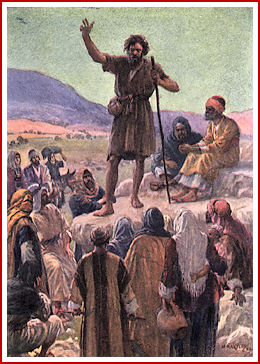
Showing posts with label Gays. Show all posts

Saturday, February 4, 2012

When being "nice" is the devil's work

No Gospel study today, as I have a couple of other things that have come up for this week, instead.

First is to let those who are interested know that I'm going to drop off of Twitter and (in a week or so) close the account. Especially locally these days, God's putting more and more into my path people who have rejected Jesus because they (quite rightly) reject the smiling, "loving", evil-living people who most loudly call themselves "Christian" – and yet these folks I'm meeting now are still blessed with craving the real Jesus (though they aren't quite there realizing it yet, their questions and constant coming back to me with them show their real hearts). They ask me hard questions, and need real, non-BS answers, and I'm needing more time to devote to what helps them. So, Twitter is among the things that have to go, to free up my time.

I will continue this blog, however. So if you're happy here, I'll still be here :) But I'm also going to really start pushing myself to write and complete the little resource book for people who can't stomach what calls itself "Christianity" but still want and need (the real) Jesus. I think I've mentioned writing this before, so I'll just say again that I'm looking to write something that's sturdy, pocket-sized, and cheap – something that can be handed out and passed around as suits folks (If you already know of such a resource, please let me know). I already have almost a dozen people locally I'd love to give one to today, if I only had it written already.

Second thing is I've received a public prayer request from a brother who's been around "No Just. Just Jesus" (and its predecessor) for some time. Chris is also concerned with people who reject Jesus because "Christians" are being jerks. Most specially at this time he's concerned with a young woman who's become an atheist in response to bad "Christians", and who will most likely remain an atheist not only due to the storm of devil-heart "Christian" responses she's gotten for expressing that, but also from the lack of response she's likely to get from those who DO truly have Jesus (and not the devil) in their hearts.

Brother Chris writes:
"I'm absolutely horrified that this can somehow pass as Christian behavior today.  The most ironic thing about this whole situation is this:  One big reason this poor girl is an atheist in the first place is the piss-poor job we as Christ's representatives have been doing to show His light in the world.  (In fact, that's a big motivation behind my signature change.) [LYNNE NOTE: Chris' new email sig says: 'Christians are the best people to know when it comes to religious conversion... as long as you want to become an atheist.']  I've been requesting prayer for Jessica, that God will guide her away from those false Christians who would wish harm upon her and show her the true heart of Jesus Christ, and I hope you'll do the same.  Also pray that those Christians who are condemning her, that they will realize the harm they are doing by pushing one of God's children away from Him and to repent of their arrogance.  Pray for those of us who can't pray for them out of our own desire for blood, and help us to truly be the heart of Jesus to these "Christians" who think they already know Him, just as they (and we) should have been for Jessica.  And pray for all sincere followers of Christ to avoid this ironic trap that the devil has laid for us -- leading us to the lake of fire that we proclaim others deserve more than we do."

I am in agreement with Chris in this prayer, and I pray that you are, as well! Here are the thoughts I'd like to add:

There are those who've figured out that Jesus isn't represented by most of those who call themselves "Christians", and we understand that those who threaten and bad-mouth people who are different than them actually serve the devil – and not Jesus.

But too often we don't ALSO figure out that those "Christians" who don't respond to these "Christian" attacks on people are ALSO serving the devil
– and not Jesus. The person who commits the spiritual assault, and the person who recognizes the spiritual assault but does nothing, are each guilty of the assault. To recognize that something sinful and wrong is being done but do nothing to stop or speak up against it, makes one even more sin-guilty than the person whose heart is so full of religious-devil they don't even truly know godly right from wrong anymore.

We might see it like this:
A rabid dog is running around the neighborhood, biting people and infecting them with rabies too. A veterinarian in the neighborhood sees the dog and recognizes its sickness and the sickness it's now infecting people with; but the vet shrugs her shoulders and thinks, "Oh well. God will take care of that dog and those people. I'm just going to demonstrate real health for these people by not acting like that dog, and not having rabies myself."

Who's at fault in this scenario?
  • The dog so out of its mind with disease it's like someone demon possessed? 
  • The people being hurt by the dog, because they don't have the knowledge to recognize its disease symptoms and stay the heck away from it? 
  • Or the person who does have the knowledge to recognize how diseased and dangerous the dog is, but who comes up with some B.S. reason not to act to stop the dog and protect and heal those it threatens?

Today, "Christians" who congratulate themselves on demonstrating "Jesus" and "godly behavior" by not acting in the world against evil doctrine and evil actions that harm others spiritually, emotionally, and physically, aren't real Christians, as Jesus defined His followers. At worst, they're selfish jerks who have their own happy, calm lifestyle at heart, and not Jesus. At best, they're people who've been convinced that Jesus, Paul, Peter, John – and Elijah, Isaiah, Moses, and more – were the only people ever supposed to stand up for God's way of doing things, and against the evil that only pretends to be God's way of doing things.

But where would we be..
  • If Jesus hadn't actively confronted the Pharisees and Sadducees, and actively helped others to heal from their false messages about who God is and what God demands from His (real) people? 
  • If Paul hadn't actively pointed out how ungodly and just plain evil the Corinthians were – and in ways that spoke not only to them, but also to the rest of us since? 
  • If Peter and John hadn't stood up publicly against powerful religious groups who were misrepresenting God and His ways to the world, being willing even to be tortured and die if need be, rather than go along with or ignore evil-pretending-to-be-godly?

Too many will argue that God endowed those people with supernatural power to do those things – and still only gives that power to a few, today. Which is total, selfish, hogwash. It's the spiritual equivalent of the hogwash-reasoning that allowed the Communists to take over Asia and Eastern Europe, the Nazis to take over Germany, and the religious bigots to take over the USA today. It's the hogwash-thinking that lets millions upon millions around the world never see or retain the real Gospel of Jesus Christ, because "I'm too scared to speak up", or "God's ordained others to speak up", or "All things happen according to God's plan". Bullshiat.

There are Gay people, people of conscience, politically leftwing people, women, poor people, atheists, pagans, science-oriented people, and more all around you RIGHT NOW who don't know Jesus because they've never heard or seen anything but the devil-worshippers who wear Jesus masks.

They think they can't have Jesus, or that good people have to reject Jesus, because no Christians stand up in their community, in their workplace, in their neighborhoods, to say to those falsely representing Jesus, "You need to knock it off. Your lives aren't godly. Your message isn't godly. What comes out of your life shows your heart is full of evil, and you need to repent – not these other people you're bearing false witness against", and to those who've only heard people falsely representing Jesus, "The Bible warns everyone that false-Christians will be the majority. Jesus said not to be fooled by them. Let me show you what else the real Jesus has to say, to and about you, and then you can decide based on what and who Jesus REALLY is."

It's really not complicated. The devil runs this world, until Jesus comes back. And being a light to others does NOT mean being nice and polite and loving to our neighbors while false-Christians shred their understanding of who Jesus really is. Even pagans and atheists are nice and polite and loving. It's only our own selfish wish for a happy life without demands put upon us that makes us believe being nice, polite, and loving is all it takes to really be about Jesus.

The time is growing short, my friends. Jesus never told us when He would return, but He warned us that really harsh times like no one's seen before would come before He did. And if we believe the world we live in now – with its chemical, biological, and nuclear weapons poised for worldwide action, genetic and chemical pollution destroying our health and twisting life on this planet, politics and religions that lust like mad rapists after the horrors of war, and conscienceless economies that take food from the babies of billions so that a few thousand rich can have more and more – isn't a set up for really harsh times like no one's see before, we delude ourselves.

Not only are we ALL Jesus-charged to make sure our own faith remains intact during the harsh times ahead, but we are also all Jesus-charged to spread and protect God's real Gospel message to all those around us, even if it literally costs us everything to do so (even if it costs us our lives).

To imagine being a true follower of Jesus Christ requires anything less is to imagine that modern faith is opposite the faith Jesus taught and the first disciples lived.
To believe that God's ok with that is to make the exact same mistake/sin as all those in the Bible who claimed to be "God's People" without actually doing what He said to do. The Bible tells us their fates – and leaves no question about our own, if our faith, like theirs, requires nothing more than our own ways of happy, quiet, religious pleasure.

Who are the people in your life right now who need to hear God's real Gospel message? Who've only ever heard the devil-worshippers in Jesus masks? Who've been taught they can't have Jesus? Who've been made to believe the only way to be a good person is to reject Christianity - and therefore Jesus Christ, as well? 

What are the ways you can stand up to those who are feeding them full of this false, ungodly garbage? To lovingly, but without reservation, call them on their crap and tell them to stop blaspheming God with their false hearts and false words, so that others aren't fooled by their "witness"?

What are the ways you can show the real Jesus to the people who are being hurt by false witness? What healing do they need? A nonjudgmental and sincere friendship? A shoulder to cry on? A Bible translation that hasn't been reinterpreted to make it seem God condemns them? A simple tract that communicates God's real love for them that they can keep in a pocket or purse for private reading and comfort? Maybe just someone to share with them what Jesus really taught and wants from His people? 

How can you make yourself available to do God's work for these people? Do you need to pray for strength or wisdom? Do you need healing yourself first, so that you don't accidentally pass on the spiritual rabies you still carry, instead? Are there others you can work with, to give each other strength and counsel, to learn from each other and help carry each others' burdens? Doing God's real work requires God's hand - we can do none of it on our own! How will you let God lead, and let God help?

Email me if you'd like to discuss more options or informational tools, or if you have ways you already actively show the real Gospel to those who've been lied to about it. I'd love to hear it! When I can do so without violating someone else's privacy, I will start sharing my own adventures in doing God's salvation work with others, as well.

Until next week –

In His love,

Lynne
---
This article written by Lynne at http://NoJunkJustJesus.blogspot.com/. You can contact Lynne at NoJunkJustJesus@gmail.com.

Saturday, January 14, 2012

Are you so smart you're stupid?

We're continuing on with our chronological walk through the Gospels, seeking – and finding – the (real) Jesus Christ, as He presented Himself to us (and not in the ways He's misrepresented even today by those who most loudly call themselves "Christian").

As always, you can find all our previous posts in this series, going through the Gospels chronologically to find the real Jesus, here.

And as always you'll find the scriptures for today are here.
(Note that you can change the human-translation version on this scripture page, as suits you. I have NO theological or other tie to the online-bible site I use for this blog – it just lists many human translations to choose from, including the NASB, KJV, The Message, and the NRSV, which are the ones mentioned by those I chat and email with.)


This week's scripture should be a warning to those who discount Jesus' ability to do miracles beyond what we normally expect from the standard "physics" of this world – and that's almost all of what calls itself "Liberal" or "Progressive" Christianity today. It also gives warning to those "Good Religious People" we've come to see so often in the Bible now, as well. 

In this week's scripture, two guys who are blind are following Jesus (and we assume the crowd of disciples, God-seekers, gawkers, etc also following Him), hollering out for help. Note that they call Jesus "Son of David", which meant they understood Him to be the Messiah promised to Israel (and the world).

They followed Him all the way into somebody's home (or other indoor place), still clamoring for Him heal their blindness supernaturally. They aren't asking Him for a pill, or a better doctor, or a good hospital, after all. They've heard from others that He can raise the recently-dead, throw demons out of people, heal disabilities, and more – and they want the same kind of miracle for themselves.

Jesus gives them what they want – but He first asks them if they truly believe He can do it.

If these men had been like many "Liberal" or "Progressive" Christians, though, they would have had to tell Him something like, "Well, Lord, since I'm a modern-believer, with science and reason at my disposal, I've risen above superstition and mythology. No, I don't believe you've actually done anything supernatural. But I do give you greatest honor as an awesome teacher whose teachings inspire me to live a loving, moral life. I also appreciate the lessons to be learned from the metaphorical or figurative 'miracle' stories told about you by well-meaning but backward human beings who lived in a pre-science culture. I suppose if my blindness is actually being caused by some psychosomatic distress, then you might be able to 'cure' it with what's really a spiritual 'sugar pill'. But if my blindness isn't purely psychosomatic, like I'm sure the so-called 'demon possession' of the guy behind me is, then, no, Lord. I know better than to believe you can cure me."

And, since Jesus healed the blind men in our scripture to the extent they believed He could, the literal-miracle-rejecting "Liberal"/"Progressive" Christian would get – what? Nothing.

Now, does this mean that every time someone prays for a blind person (or anyone with any kind of illness, disability, trouble, etc) Jesus will automatically heal them? No. The Bible itself shows us that Jesus walked all over Israel, and only a tiny number of the many, many who suffered there received healing. We might be tempted to say that people get healing depending on how close they are to Jesus Himself or to His praying-people, but the Bible never shows us 100% healing even of every believing-person. Timothy, for example, had gut and other problems that apparently were accepted as just a part of life to deal with. Paul, for another example, had some kind of ailment God simply wouldn't heal because otherwise Paul risked becoming as worthless to God as most "ministers" are today.

The Bible does show us that God acts supernaturally in this world when it works for His plan. Jesus acted supernaturally (in healing and more) 2,000 years ago – just as He does today – when that supernatural action illustrates God's power, His nature, or His intentions for our future, or when that supernatural action freed a "trapped" worker who was unable to continue working towards God's plan as s/he was. So, even if we do have big ailments or disabilities and don't get healing in this life, we know God has the power to heal, and that our healing will come – when Jesus returns for us, if not before.

If, that is, we are willing to believe He can and will.

  • Nothing in the Bible says science or reason should be thrown out - but everything in the Bible says that God isn't limited by anything we can understand. Are you able to appreciate and use science and reason in ways that benefit yourself and others, without denying that God can act outside the rules He created for this world when He created it? 
  • Have you had times of refusing miracles in your life because it didn't seem "reasonable" to expect them? What would it take for you to open up to God's ability to show His power, nature, and future intentions through your life, as fits His plan for the world? 
  • Since even Timothy and Paul (who were great workers of wonders in Jesus' Name) had ailments and other physical problems that were apparently never healed while they lived on this earth - and yet never believed that meant Jesus couldn't do supernatural things or that God didn't love them beyond measure anyway, why do we?

The scripture story today ends as they often do – with the Good Religious People accusing Jesus of using demonic power to accomplish what doesn't elevate and sanctify their way of being "godly". If you've been following along in our study, you can easily shake your head and say, "Same stuff, different day!" And truly, Good Religious People never change. Through the Old Testament, the New Testament, the centuries since, and even today, they proclaim themselves as God's People even as they reject living the way God has said His people must live. They also claim to be the one's He's using in His plan, even as they act against Him at work in the world when it doesn't please their own religiosity. An easy example today is the Holy Spirit action in the lives of Gay people today, as God heals more and more of them of the spiritually alienating and deeply wounding false-witness and intentional Bible-mistranslation Good Religious People have bludgeoned them with. Just as God called the Gentiles, even when it torqued off the Jews, God calls Gay people, even when it torques off straight people. And witnessing God at work, all Good Religious People today can do is screech "Satan's power at work! Satan's power at work!"

They truly never change.
  • What lessons has the Bible taught you so far about Good Religious People and the mistakes they make (intentional and otherwise)?
  • What dangers do we face when we do follow along with or let ourselves be guided by Good Religious People? 
  • Have Good Religious People spiritually injured you or someone you love? Are you more able now to understand their attack as part of Satan's work, and not God's? What help can you find today to get you the additional spiritual healing you still need, so you're no longer a trapped and inured worker who can't help in God's plan?

Until next week, and in His love!

Lynne
---
This article written by Lynne at http://NoJunkJustJesus.blogspot.com/. You can contact Lynne at NoJunkJustJesus@gmail.com.

Friday, January 6, 2012

To hell with anyone who blocks your way to Jesus

A few posts away (I'm feeling much better with my allergies, btw – thanks for your prayers!) but now we're back to exploring who Jesus really is, outside how He's been so long defined by what most loudly calls itself "The Church".

As always, you can find all our previous posts in this series, going through the Gospels chronologically to find the real Jesus, here.

And as always you'll find the scriptures for today are here. (Note that you can change the human-translation version on this scripture page, as suits you. I have NO theological or other tie to the online-bible site I use for this blog – it just lists many human translations to choose from, including the NASB, KJV, The Message, and the NRSV, which are the ones mentioned by those I chat and email with.)


So far, we've seen from the Bible itself, without having to do any kind of monkey-plays or pompous theological arguments, that, despite how Jesus is interpreted even today by "Good Religious People" and Big-Words Theologians:
  • Jesus was always on the side of those who were abused, mistreated, and oppressed – never on the side of those who do the abusing, mistreating, and oppressing. 
  • Jesus was always on the side of the spiritual rejects and the sinners – and never on the side of those who make sure others know they are spiritual rejects, or the side of the Good Religious People. 
  • Jesus requires His followers to be so strong they refuse to do violence or hurt back, even if attacked to death – not so weak they worship violence, war, and domination. 
  • Jesus warned us repeatedly that most of those who claim to be His people will be spiritual liars and cheats, fooling even themselves all the way to hell – and He commands us to realize their error and not get caught up in it ourselves. 
  • Jesus never presented anything of God as requiring a seminary education or a "pastor" to understand (study, yes, using our brains, yes – but "church" related stuff? No). In fact, the Bible shows us that to truly understand what Jesus means has always required NOT having human theological ideas in the way of God's simple message. Jesus (and others in the Old and New Testament) show us again and again that – despite our belief that more theological ideas and degrees and titles means more understanding of Jesus – more theological ideas and degrees and titles means LESS understanding of the real Jesus. 
  • And more!

This week, our chronological Bible tells us about Jesus illustrating that death isn't how we usually imagine death at all, and, healing a woman who was sick in more ways that we can even imagine today. What do you learn about Jesus from these stories? Here's what I see:

When people – even people who normally refuse to believe in God – are desperate and hurting, there is always that tendency to turn to God and plead for help. The Bible doesn't tell us if Jairus and his family already believed in Jesus. Yet we can see that, even if he wasn't yet a believer, Jairus was desperate enough to reach out to Jesus – and isn't that how many of us come or come back to Jesus in the first place? 
  • Have you reached out to God in desperation even in times you didn't believe in Him? What happened? How (or did) it change your relationship with Him? 
  • The Bible doesn't tell us if Jairus came to Jesus for help because he believed He was a miracle worker, or if he actually understood He was God. If Jairus got through this whole event and only ever understood Jesus as a worker of supernatural things, he would have missed completely that God is on his side even through death. Have you or others you care about understood that Jesus could do supernatural things, but missed that Jesus is also God on your side?

Jairus thought he was going to lose his little girl – and, in fact, before he got Jesus back to her, she did, in fact, die. The people telling Jairus that his daughter was now actually dead told him not to bother Jesus any longer. "Death", they would have told us, "is the end. Miracle healings might happen here and there. But death is never undone."
  • What are the things you believe are just the end – never to be undone? Does God have power even other those things? In what circumstances might He change them?

On the news that his daughter was dead, Jesus told Jairus not to be afraid, but to believe, instead. After we've lost someone to death, we might understand the fear of having to live the rest of one's life without this loved one. We might also understand the fear that comes from being reminded of our own mortality. Jesus, though, offered comfort in belief. Like He could have also said, "No need to fear death – the answer to death is standing right here. So just trust that answer to apply, even now!"
  • Many of us have heard that the antidote to fear is to believe – but what does that look like in your own life? Does it mean letting go your natural fear of death? Does it mean giving over your worries over money or job? What are all the ways Jesus' comforting command to believe instead of fear might or does impact your own life?

When Jesus told the gathered crowd of mourning that the little girl wasn't dead but asleep, they laughed at Him. And I'd have to say that if some guy I'd never seen before walked into a funeral and told everyone there that the only person in the room not breathing any longer was just asleep and not dead at all, laughter would be the nicest reaction I might have. Yet I can't imagine how my reaction would change if the dead person suddenly woke up and got something to eat!
  • The Bible tells us that even Satan and those who work for him can do miracles at times, so it's not always safe to assume that because something miraculous is happening that means it's from God. What specific things can or do you do in your own life to keep from being fooled into following after lying signs and false wonders?

This scripture passage also talks about a woman Jesus healed while on his way to Jairus' daughter. If we don't know enough about the ancient Mosaic Law the Jews lived under, we won't realize that this woman's problems were threefold. Not only was this woman's health terrible (she's been having menstrual bleeding for twelve solid years), and not only had she wiped out her financial resources trying unsuccessfully to get healing from medical doctors, but also according to the religious law she lived under she was "unclean" because of her bleeding. All men and women were made religiously unclean at certain times and under certain circumstances (check out Leviticus 15, for example). If this woman had been having normal periods, she could have gotten "clean" again after a certain passage of time without bleeding. Since she never stopped bleeding, though, she never had that opportunity. That meant she wasn't allowed to touch anyone or anything, or they too would become "unclean" and also have to undergo purification time and rituals to keep from spreading "uncleanness" even further. Imagine living your life sick as a dog, being wiped out financially by doctors, and not being allowed to touch anything (not a person, not even the railings on the city bus) without possibly enraging people so much they might kill you for it. Now imagine living that way for twelve, long years, with no end in sight.

Until this miracle-guy shows up.
  • Since the Bible shows us that Good Religious People of all kinds have always followed or ignored parts of the law God gave them however they wished, should we be at all surprised that Good Religious People today also pompously bellow one part of God's law but explain away and hide others? For example, Good Religious People like to quote the Mosaic Law as if it condemns Gay people – but they explain away the parts that condemn their failure to follow the rest of the Mosaic Law (like men and women both needing to do ritual purification after having any kind of voluntary or involuntary "discharges"). What does that tell you about whether you should be getting your information about what God wants from you from Good Religious People? 
  • For centuries, "Christians" have been telling women they were "unclean" because they have periods, even telling them at some times in history that they wouldn't go to heaven if they died while on their periods! Yet all these centuries, no one ever told a man he couldn't get into heaven if he died while having a "nocturnal emission", or that men weren't fit for ministry because they become unclean by nocturnal emissions. Since so much human B.S. has always coated what most loudly calls itself "The Church", should we be surprised when that same "Church" continues today to trumpet its own highly intellectual and theologically "proven" versions of B.S. regarding God's supposed condemnation of Gay people, God's supposed support of war, God's supposed shoving women into the back of the church, and so on? 
  • Most Gay Christians can empathize with the woman in this scripture, having been exiled as "unclean" in a different way from their communities and being unable to perform any "purification" that would make them OK in the bigoted eyes of their straight spiritual "fellows". But others can also relate – even if their only "uncleanness" is a refusal to play the shallow Sunday-Dress-Up required to attend most "churches" even today. In what ways can you empathize with the woman in this scripture? But in what ways are you more like those who condemned or looked down on her, refusing to give her the basics of human touch and love because you didn't want to be "unclean" yourself?

One thing that can be said of this woman: she had guts. Unlike many who might undergo even less than she had, and who might have just given up and died, she clung to life. She clung to hope. She kept trying, and trying, and trying, even when trying just seemed to bury her deeper into trouble. This is yet another time when the New Testament Bible broke tradition by showing us strong women in a culture that ignored and even attacked strong woman.
  • Whether you are male or female, do you have this woman's guts in the face of trial and pain? Is she a great example to you, when you need to see that it is possible to keep going and keep trying even when all seems to have failed?

This woman not only had guts – she had gall. Maybe that gall, that bold, shameless behavior, was also born of desperation. Doesn't matter. This woman pressed her unclean self not only through a crowd, immediately "polluting" everyone she touched (who then immediately polluted everyone they touched, who then immediately polluted everyone they touched, and so on) – which could have started a riot and gotten her stoned – but she also crept up on Jesus, intending to touch Him in a way He wouldn't notice, even though it would also make HIM ritually unclean. All that in hope of being rid of her sickness and isolating shame.
  • Have you had this kind of gall with God? Have you ever pushed your way to Him, and to hell with anyone who gets in your way? If not – why not?

The woman felt herself instantly healed upon touching the edge of Jesus' cloak. Imagine her elation – and then imagine it turning instantly to horror when Jesus turned around and demanded to know who had touched Him. She knew she'd just made Him ritually unclean – even healed, the religious law she lived under still required time to pass and a ritual to be performed before she would no longer be "polluting" others. She must have believed her life at great risk when He and the crowd figured out what she'd done. All she could do was what all people in those days did when confronted by the power of one or more people who could hurt or kill if they only just chose to do so: terrified, she fell on her face and confessed, hoping for mercy in even the tiniest form.

But the violence – rage, fists, rocks – she could expect in her religious culture didn't come. Instead, Jesus congratulated her on her faith in His ability to heal her, and sent her off in peace, free from more suffering.
  • The Good Religious People of that day often stoned "unclean" women who touched others. In the centuries of what most loudly calls itself "Christianity", Good Religious People have burned people at the stake and otherwise tortured and murdered them, taught them to feel shame over who they are, and made war in "God's" name against people who weren't like them in one way or another. Not one bit of that is like Jesus anywhere in the Bible. Yet we too often continue being fooled by this false "Christianity". Why? 
  • Imagine being Gay and with shameless gall pressing through a crowd of "Christian" bigots to get to Jesus, sure that He can heal the hurt false Christians have done to your heart. Imagine fearing Jesus will turn on you like false "Christians" have – only to find He instead congratulates you for your faith and sends you off in His peace. Now read Revelation 3:7-13 and know that that's exactly what you're going to hear from Jesus, in the End.

Today we got to see Jesus' power at work – not just in healing death and sickness, but also in reorienting our religious thinking so that we can see past the religious nonsense we live under and even pass on to our children, thinking we're doing them a good thing.
  • What ways do you need to reorient your thinking about Jesus? Is Jesus like the supporter of war, supporter of sexism, supporter of homophobia, supporter of economic oppression, and so on that "The Church" has reinterpreted Him as all these centuries? 
  • Was Jesus at all prevented from being who He really is by all the Good Religious People and their dumb ideas while He moved around, doing His work? Why should we assume, then, that we can't find the real-Jesus today because "The Church" has done so much Bible-twisting over the centuries? 
  • What needs to change in your life this week? What can Jesus heal for you today, that you never imagined could be gotten rid of before?

Take care until next week!

In His love,

Lynne

---
This article written by Lynne at http://NoJunkJustJesus.blogspot.com/. You can contact Lynne at NoJunkJustJesus@gmail.com.

Friday, November 25, 2011

Just how DOES God act in the world?

We're still in our (chronological) study of the real Jesus of the Gospels, which we're finding is far outside how He's always portrayed by the Good Religious People of the world and their "Church".

Today, Jesus talks about how God works in the world, but also how we hit or miss the mark in our search for a relationship with God, and – just like we saw last week – He delivers His message in parables.

As always, you can find all our previous posts in this series, going through the Gospels chronologically to find the real Jesus, here.

And as always you'll find the scriptures for today are here. (Note that you can change the human-translation version on this scripture page, as suits you. I have NO theological or other tie to the online-bible site I use for this blog – it just lists many human translations to choose from, including the NASB, KJV, The Message, and the NRSV, which are the ones mentioned by those I chat and email with.)


First, Jesus tells the parable of the mustard seed. I'll only quickly note that the scholars and other "Big Thinkers" of the world have long debated over this tiny mustard seed Jesus referred to, pointing out that mustard seed was not the smallest seed known to Jesus' listeners, and the mustard plant – even when it reached its biggest height of about ten feet – was never big enough to be called a tree or for (most) birds to perch in it.

Such big-thinker-ism is a good example of why relying only on one's intellectual resources to understand God – and therefore falling into literalism and what we can measure and deduce – means a big, fat failure. It's an example of why we shouldn't be pegging our salvation on what the smart people of the world can figure out, because they too often get so tangled up in "explaining" things that they miss the whole point of the message. They're like people who hear, "It's as hot as the sun in here!", but because they're too busy arguing and preaching and lording over what their thermometers find and under what circumstances anything on earth could truly be as hot as the sun and so on and so forth – they burn up in the fire everyone else fled.

This does NOT mean: "God doesn't mean for you to use your brains." Obviously, He does. But part of using our brains is figuring out when a message or point is being made with what's called hyperbole, or exaggerating for effect. That's certainly a story technique that Jesus uses sometimes, and it's one He uses here.

The second thing to realize as we go through this and other parables, is that we have the benefit of "seeing the answers", because we can read even what the disciples had to have explained to them later. But when Jesus was speaking these parables, no one had a "cheat sheet" called the Bible, and so people then had to rely on how much of God's Spirit they had in their hearts to help them understand what Jesus was showing them. That means many people – Good Religious People who did every Religious thing they knew to go – never understood a word Jesus had said. To them, even though they counted themselves as God's People, Jesus might as well of been speaking on gibberish: they never "got it", because they never "got" Jesus.

However, the fact that we can claim to "get" what Jesus' point was in these parables because we know what these parables mean doesn't mean we actually "get it" any more than most people 2,000 years ago did. As we've said, WE have the "cheat sheet". So we are actually in more danger of never "getting it" than the Good Religious People Jesus was originally speaking to, because we can know the words intellectually, but not spiritually, as measured in our lives. In that case, we're like people in an algebra class, who, when test day come assume we've learned all there is to know from it – but who have only memorized the answer sheet for the final, and therefore can't actually do algebra at all.

Once again, what matters to Jesus isn't what we can show with our mouths and what we can memorize and even teach others, but what we can live with our hearts and minds and spirits.
  • The people listening to Jesus heard His words – but only a tiny, tiny few ever understood His point. yet these were highly religious people, well-schooled in God's rules and ways. How dangerous is it to just assume that, because we go to church to hear the Bible preached, we are getting Jesus' point? 
  • It doesn't take a Bible scholar to realize that the vast majority of those who call themselves "Christian" don't even come close to living like Jesus (though they're really good at living like what they call "Christian"). Even God-rejecters can see that. In what ways do you call yourself "Christian", but have actually only memorized the Bible answer-sheet and not really learned Jesus' lessons? Are you ready to turn away from your "answer sheet Christianity"?

Ok – so what is Jesus talking about with the parable of the mustard seed? He tells us that the kingdom of heaven – God's way, in other words – is like a tiny, tiny thing that grows unexpectedly, astoundingly, even "abnormally", huge. So huge, in fact, that even those not expected to find shelter in it can and do.

Another parable. Jesus says God's way is like yeast – another tiny, tiny thing – that gets mixed all through everything, so that in time it's everywhere.
  • God starts with a lot of tiny things, and then grows or mixes them everywhere. He started with one little human being, and grew us into billions. He started with one Man from a tiny, backwater part of the world, and mixed that Man's message all through the world. Is God planting something tiny in your life, working to grow that something all through who you are so that you also become a resource for others to shelter in?

Then we come to Jesus' parable of the weeds – a parable that we should find great comfort in, when we wonder why God allows evil and evil people in the world. Through this parable, Jesus tells us that God "planted" good, but that the devil came along later and planted bad among God's good. But if God were to rip out the bad people from among us now, others who are good might be destroyed also – something He won't allow. Instead, He tells us, both good and bad people will inhabit the world – until, that is, Jesus comes again to sort us out for good.
  • There are many people – either because they've been turned off of Jesus because of the crappy example of "Christian" Good Religious People, or simply because their hearts haven't opened to God yet – who would count even right now as "bad" people. Yet because God hasn't chosen to "harvest" yet, they aren't sent off to hell with the people who simply will always reject God because they love evil. Have you in your own life been a "bad" person that God has allowed to stay mixed in with the good people until you could heal into the good person God created you to be? 
  • Does this give you comfort, understanding that God is still in control, His plan hasn't "failed", and He still cares deeply for us, even when our lives are impacted by the "bad" people of the world? Are there others you could share this comfort-message with in your life, today?
  • Jesus speaks more than anyone else in the Bible about the reality of hell as a place where good-rejecters end up. But He also speaks (as do many others in the Old and New Testaments) about God's continued attempts to save people from hell by inviting them to the real good they can only achieve through God. How should knowing this affect our lives? How does it currently affect your own life?

Jesus said God's way is like a buyer of fine goods who's seeking for something really special. When he finds it, he gives up everything he has to buy it.
  • The buyer could be us. Have you discovered in the Gospel THE treasure you've been searching for? Have you given up everything to be part of it? 
  • The buyer could be God. Have you considered that Jesus searches everywhere for you, and that He gave up everything to make you part of His People?

Jesus said God's way catches up everyone – every kind of person there is – and in the end the angels separate the good from the bad, gathering up the good to keep, and tossing the bad into hell.
  • Jesus said God chooses good people over bad – not straight over Gay, or white over Black, or male over female, or rich over poor. What do you imagine a heaven full of God's people will look like? Does it look partly like you?

See you next week, when we'll take a look at how God's supernatural power can act in the world, and what that means for our lives today.

---
This article written by Lynne at http://NoJunkJustJesus.blogspot.com/. You can contact Lynne at NoJunkJustJesus@gmail.com.

Friday, November 18, 2011

Who's condemned by the Parable of the Sower?

Ok – back on track with our (chronological) Gospel study. Sorry to have missed everyone last week! Just too much to do, and got way too far behind, and way too exhausted trying to keep up :-) Times like that are always a reminder to me that God worked the need for rest and downtime into Creation, as well – and we only suffer for it when we don't go along with His plan for the world, OR for our bodies.

In any event, we are indeed continuing through the Gospels, specifically to discover who Jesus really was and is, outside how we've been taught for centuries to view and understand Him by what most loudly calls itself "The Church".

As always, you can find all our previous posts in this series, going through the Gospels chronologically to find the real Jesus, here. 

And as always you'll find the scriptures for today are here. (Note that you can change the human-translation version on this scripture page, as suits you. I have NO theological or other tie to the online-bible site I use for this blog – it just lists many human translations to choose from, including the NASB, KJV, The Message, and the NRSV, which are the ones mentioned by those I chat and email with.)


Today's scripture passage covers a well-known parable: "the parable of the sower":

A farmer goes out sowing seed like all farmers did back then, and like non-industrial farmers do even today: walking along and tossing out handfuls of seed along his/her path. But different things happen to different seeds, depending on the environment they land in. Jesus wants us to understand why different things happen to people's faith (or lack thereof), depending on the spiritual environment we're in. He gives us four groups to consider.

Group 1: All the folks who hear God's Good News – but really, they couldn't care less. Here's a today's-world example. It doesn't matter how often I see advertisements or hear friend recommendations about how great western movies are – I simply don't give a hoot about westerns. So when I hear about them, it just goes in one ear and out the other. I might as well have not heard the western-movie information at all, because I'm just not interested in even knowing that western movies even exist, much less in learning more about them or going to see one. That's how these folks feel about the Gospel: "Don't bother me – I'm busy with more important things!"

Group 2: The people who hear the Good News – and they love it! Love it, that is, until someone makes fun of or hurts them for being a Jesus-follower, or until some other kind of hard time comes. Then, because their faith has no real root, it just dies.

Group 3: Those who also hear the Good News, and also love it – at first. But then their faith gets choked out by what the world has to offer and the crapola it makes us deal with. Note that Jesus doesn't say they become nonbelievers at that point, but that they then wither and fail to mature, or remain unfruitful (meaning, they don't produce what God wants).

Group 4: Those with a noble and good heart who not only hear the Good News, but then grow in and from it, sticking with it no matter what happens, and thereby produce God-plan results God's interested in.
  • Usually the first thing people do when they hear this parable is ask themselves which group they fall in. So – which group do you fall in, today? Have you been in different groups at different times in your life? Is it possible you could shift to a different group in your future, if something does or doesn't happen? 
  • At what point do you believe Christians should stop expending evangelism energies on people in Group 1? How should we decide who falls into a Group 1? DO we get to decide who's in Group 1 and who's not, since God tells us not to judge and that only He knows people's real hearts? 
  • "Christians" often "assign" certain kinds of people they don't like to Group 1, as if simply being Gay, or divorced, or pagan, or registered Democrat/Republican, or whatever means one will never come to know or want Jesus. What would you call an attitude that believes "Not being like me" is the same as "Forever rejecting Jesus"? What do you imagine God thinks of such attitudes? 
  • Many of us could count ourselves in Group 2 at various times in our lives, until we get a firm grip on the real Gospel. When we're convinced that the shallow spirituality of "Church Christianity" is the Gospel, then, of course, when we need the deep roots of (real) Jesus to sustain and ground us through hard spiritual times we just don't have it. Have you had times of shallow spirituality that left you defenseless against religious or world attacks on your faith? What helped you move out of the "rocky soil"? 
  • Though they never see it, almost all those who call themselves "Christians" are actually not in Group 4, but in Group 3. They stay Bible-babies most/all of their lives, because they are part of "church" communities that make worrying and hoarding money and other wealth, enjoying nice houses and cars, wearing their religious clothes and titles, prettying up their "church" buildings, and so on all part of what they believe is "normal" "faith". But a life in Jesus has nothing to do with those things – even when the "pastor", "priest", or "pope" assures us it can and does. Just like Jesus said we can't have God's stuff in our heart AND money's stuff in our heart, we can't have God's stuff in our heart AND world's stuff in our heart. Have you been taught that God's way includes money's or the world's way, in your contacts with the immature "Christians" who dominate "tradition", "seminaries", "churches", and so on? Have you considered how much it blocks you from true maturity in Jesus Christ? 
  • Group 4, of course, is where we want to be. Jesus tells us that people who belong to Group 4 got there – how? By (1) having a noble and good heart (unlike the people in Group 1), and so not being already stuck in evil and refusing to get out, and (2) hearing THE Good News, which means the real Good News of Jesus Christ, and not just the false Sounds-Good News of Church Jesus (unlike Group 3), and (3) keep the real deal even when things get really ugly (unlike the people in Group 2) -- and, because they have all three, therefore are able to produce abundantly what God actually planted them to produce. Has anything moved you around in your life, between groups? What has kept, or keeps you even now, from moving into Group 4 and accomplishing the things God's planned out for you to do? 
  • Did you notice here that Jesus only talked about people who'd actually heard the Gospel? Notice He never says that people who truly haven't heard it aren't condemned. Who today really, truly, could be said to have never heard the Gospel? Many today have heard A gospel - but not the real Gospel. If they have a good heart but angrily reject God because they haven't yet understood that He has nothing to do with the false gospel, do you think God condemns them? Do you think they could count as among those who truly haven't heard the Gospel yet?

There's another question in all this, though – a question about why Jesus used parables like this in the first place. Why be so cryptic? Didn't Jesus want everyone to hear and be saved?

Here's where we can get confused, if it hurts our hearts to imagine that anyone has to go to hell or not be saved. We know God is love, and we know God wants to save everyone – the Bible itself tells us that. However, the Bible also says (and Jesus along with it) that some people themselves choose not to be saved. They prefer things other than God, want to walk a path that doesn't lead to God, and they won't be turned from it. This isn't just meaning those who understand themselves as God-rejecters. No, this hell-bound group also includes those who imagine themselves God's Finest, but who are in fact ALSO God-rejecters because they simply create and live a version of "God" and "God's" way that pleases them more, and then expect all the same (if not better) rewards from God as those who actually accept Him.

Jesus told His disciples that He was sharing God's real kingdom information with them, and not with the Group 3 / Good Religious People, because the disciples' interest and want of God was real, not faked – and that just wasn't true of the Group 3 / Good Religious People.

In fact, the Group 3 / Good Religious People had never been truly interested in God and His way – ever. Jesus quotes an Old Testament condemnation of Good Religious People when God said they would never get it because they refused to get it, and that therefore God was going to let them hang with the rope they insisted on putting around their own necks. God could heal them, but He wouldn't, because they refused Him and what He could do.
  • "Christians" today – especially "conservative" ones – LOVE LOVE LOVE to consider just how much more "godly" they are than others who aren't like them. They claim to follow, represent, and work for Jesus Christ – and yet they don't do what He said, live like He said, or accomplish the things He said. And if anything points out how far they actually are from the real Jesus Christ? They absolutely refuse to even consider it. In fact, the farther they are from the real Jesus, the harsher they become towards those who might challenge their smiling, blind, hard-heartedness. Since these folks are among those most hell-bound for their Jesus-rejection, does it make more sense why – even though they cause HUGE amounts of suffering in bearing false witness against Gay people, re-writing the Gospel so it "justifies" war, and so on – we should be praying for them earnestly? 
  • When we finally begin to see how much Good Religious People actually reject the true God – and why He therefore has to reject them – we start to stand on a safer spiritual foundation. The Bible tells us that there are anti-Christs and False Prophets all over (and will be big ones, in the end), and though Good Religious People always try to point the finger at others, they themselves uniquely qualify as being both anti-Jesus, and, claiming to speak for God but actually speaking falsely. Do you continue to listen to or follow along with Good Religious People? How can you start moving yourself away from them, wasting less of your spiritual energies on them, as well as keeping your understanding of Jesus safe from them?
See you next week!
---
This article written by Lynne at http://NoJunkJustJesus.blogspot.com/. You can contact Lynne at NoJunkJustJesus@gmail.com.

Friday, October 28, 2011

It's safer being a sinner than a Good Religious Person

That sinner, the Queen of Sheba, getting God-wisdom
We're continuing today through the (chronological) Gospels – taking a good look at who Jesus really was and is, outside of the way He's always been portrayed by what most loudly calls itself "Christianity".

Last week, we started a look at (among other things) demons in the New Testament. Today, we'll look at a few more, and talk about the demonic in relation to Good Religious People.

As always, you can find all our previous posts in this series, going through the Gospels chronologically to find the real Jesus, here.

And as always you'll find the scriptures for today are here. (Note that you can change the human-translation version on this scripture page as suits you. I default to the NASB to get the more literal translation, but do use the one that works for you. Note also that I have no theological or other tie to the bible site I list above – it's just one that lists the NASB, KJV, and The Message, and most folks I've corresponded with seem to use one of those. However, another brother says you can also get the NRSV human translation at bible.oremus.org. If you prefer yet another human-translation that isn't on one of these other pages, do send it to me. I will also list it here).


Today we see that "demon-possessed" people were brought to Jesus. What does that mean, "demon-possessed"? Does the Bible or science tell us the real truth about demons? Or is there perhaps truth in both – or neither?

To modern human philosophies, which discount everything that doesn't fit within a certain narrow way of testing and thinking about the biological and psychological world, demons just don't exist. The modern cultures with the most power in the western world today teach us that "demons" are only psychological or mythological mind-creations of "backward", or psychologically disturbed, or "overly-religious" people (who are often presumed by the most insistent believers in modern philosophies to be "backward" and "psychologically disturbed", as well).

Problem is, being made of fallible human beings just like religion is made up of fallible human beings, what most loudly calls itself "Science" has degenerated in the last century into a mess no more logical than "Religion". In fact (and to my great sorrow, since I have a lifelong love of real science), "Good Science People" today are really no different from "Good Religious People". Both:
  • Either don't make a study, or make a poor one, of those parts of their base wisdom-materials (world or Bible) they accept as "reality", and then
  • Either consciously or unconsciously decide what they will find, and then
  • Use their base wisdom materials to "prove" what they decided was the truth, and then
  • Refuse to think outside the tiny box they've invented for their minds.

This is true all over, in physics, biological sciences (including medicine), geology, and more – just as it's true in fundamentalist Protestantism, Roman Catholicism, and the "tweeners" like denominational Protestantism, emerging/emergent "churches", and so on. Why is it true? Because human beings are human beings, and without a lot of self-reflection and being willing to give up our self-focused crap, we naturally gravitate to ways of thinking and understanding that back up and "prove" our crap. There are people, both among those interested in science and in religion, who truly work to find the real thing beyond their own garbage – but they are few and far between, and in science just as in religion, they are ignored and trashed and even punished by the science/religion majority.

So what we’ve ended up with – in both "science" and "religion" realms – is a lot of exceptionally educated people who know crap. They're "educated idiots", heads full of years of documented study the majority conformity-culture says is "reality" – but what they've really done is just memorize a particular human philosophy, and then gone out into the world to help coat and re-coat reality with their philosophy.

So, what does all this have to do with demons? Well, the truth of the matter is, the Bible doesn't tell us a whole lot about demons, and almost all of what passes for religious "knowledge" about demons is simply human philosophy about demons – not demon-reality. Unfortunately, what most loudly calls itself "Science" today has nothing more to offer in helping us understand demons than "Religion" does, because in the slap-fight it started with its sibling "Religion" several centuries back, it decided that anything that Religion even talks about is automatically NOT REAL.

So we have two large, self-focused, domineering human philosophies, neither of them doing any real work to figure demons out based on the evidence that's there or might be there, telling us what to believe about demons. What a mess.

So all we "non-experts" can do is do our own work and decide for ourselves what we believe. And hopefully we do that in a way that isn't as full of our own crap! Several years ago I did discover a book that goes more specifically and only into what the Bible actually says and doesn't say about demons. Check it out if you're interested!
  • Have you made an actual study of what the Bible itself actually says and doesn't say about demons? Where do you get your understanding of who they are (or aren't) and what they can do (or can't do)? Does your understanding need updating or refining? 
  • If you decide demons don't really exist, or decide that they do exist, how does that change or set your understanding of the various forces at work in the world today? 

In our scriptures today we see that when Jesus healed someone who was demon-possessed and also had a physical ailment (like blindness), the physical ailment went away when the demon did. One of the important things to see here is the strong reaction this caused among those who were witnesses to it. The miracle-healing and throwing out of demons made them think, made them debate within and among themselves as individuals and as a collective people:

Is this God or God's power standing right here among us? Or is there something evil going on?

As we talked about last week, of course, Jesus reminds them that if evil was using evil to remove evil power, then evil would fall – and evil isn't that stupid. So here again is God visibly and powerfully using supernatural power in the world so that the people He told to look for these kinds of supernatural events to prove it was Him (and not some huckster pretending to be Him) with them would be able to recognize Him. We know, of course, that in the end very few of His Chosen People were even willing to recognize Him, even as He stood right there in front of them doing things no human or demonic power could ever do. Remember what John (the disciple/Gospel writer, not the Baptist) said? 
There was the true Light which, coming into the world, enlightens everyone. He was in the world, and the world was made through Him, and the world did not know Him. He came to His own, and those who were His own did not receive Him. But as many as received Him, to them He gave the right to become children of God, even to those who believe in His name, who were born, not of blood nor of the will of the flesh nor of the will of man, but of God. [John 1:9-13]

Almost all of the Jews of the day believed that simply being Jewish made them one of God's people, as if nothing more was required of them than religious rituals and attendance. And believing so, their hearts and minds weren't willing to see the greatest miracle of all: God standing right in their midst. In the end, nearly all the Jews of that day rejected God, and so they made a mockery of believing they were "God's People". And who ended up really being God's People? John tells us: those Jews and non-Jews whose hearts and minds were willing to see and accept God as He lived among them. Suddenly, being one of God's People didn't require anything from the Old Testament Mosaic Law, and didn't require being of a certain people – it just required being willing.
  • We also have to ask today when we see miraculous or big spiritual things happening, "Is this God's power at work here, or is something evil going on?" Jesus and others in the Bible tell us to always question and test to make sure what we're following or seeing is truly from God, and not some evil fake. So the question itself is good. The Good Religious People back then just made it a reason to reject the real God because their fake-"God" suited them better. When in your life have you questioned whether something's really about God or not, for the right reasons? When in your life have you questioned like a Good Religious Person, and therefore done it for the wrong reasons? 
  • "Churches" and "denominations" today are rank with the insistence that we have to join up with them to be saved or one of God's People. It wasn't too long ago, in fact, when Good Religious People even had the power to torture and murder people who refused to submit to their version of "God" and being "God's People". Yet by filling their hearts and minds with their own version of "God" in the same way the Good Religious People 2,000 years ago did, they can't even recognize and accept the real One. Have you been guilty of this in the past? (I have!) Have you since recognized the error and sought healing and the true Jesus? 
  • The institutions and philosophies that Good Religious People create can be intensely addicting and absorbing, so that it can seem impossible to be free from the fear, guilt, and/or shame that keep us attached to them (physically, emotionally, and/or spiritually) even long after we've otherwise rejected them. One could even say that their complete possession of especially (but not only) those of us who were raised in their "reality" seems demonic, because of the dominating power they can have over us. Does Jesus need to heal you of any Good Religious Demons? Are you fully aware of the physical, psychological, and/or spiritual ailments you will also be free of, when Jesus drives the demon of religion out of you?

When Jesus confronted the Good Religious People in today's scripture, He told them something else very interesting – something He'd warned them about several times before, and would warn them about again, in other ways:

It's safer to be a repentant God-rejecter, than a Good Religious Person.

Why safer? Because the sincere repentance of even the evil pagans of Ninevah, and the sincere search for true-God-wisdom made by the idol-worshipping queen of the South, actually produced people able to recognize the true God and the need to live in His ways. This so much so that those who had been God-rejecters now had enough God-understanding to recognize and condemn the kind of false-God-connection the Good Religious People lived.

Good Religious People accused Jesus of being demon-possessed and demon-powered, yet who really was? Here again we see talk of demons – also called evil or unclean spirits – but this time in relationship to Good Religious People (go back and check today's scripture again, if you missed this context). Jesus says that giving ourselves a good spiritual housecleaning means nothing toward really making and keeping us spiritually clean. When we simply empty ourselves of evil (say, at a revival meeting, or during a church service, etc), but don't turn around and fill ourselves with God, then we stay religious – and Good Religious – but then end up even more evil than when we started.

Those of us not still trapped in this kind of Good Religious Trade-One-Devil-for-Seven Spirituality certainly can see this. We automatically curl our lip or step back defensively (physically, emotionally, financially, whatever) from those we find out are Big Christians or big churchgoers or big Bible-readers. Good Religious People like to pretend that people only reject them because they reject God, but in fact the Bible says that (many) people actually reject God because of Good Religious People.

Whether we are female, Gay, poor, a citizen of a weaker nation, or just an Average Joe on the street or in a workplace or family, we suffer under the huge amount of self-righteousness, self-centeredness, nation-worship, violence-worship, hate, condemnation, sexual and other kinds of abuse (of adults and children), Bible-twisting, clergy-elevation, and even just plain old lying, cheating, and stealing we see on a regular basis from Good Religious People (Christian and otherwise). And all of the evil ugliness we see in Good Religious People – whether 6,000 years ago, 2,000 years ago, 1,000 years ago, or today – is all part of what Jesus is describing here: religiously cleaning out one demon, but then ending up with seven demons. Starting out as a Level 1 Jerko, and ending up a Level 7 Smiling Ass. When we go the Good Religious Route, instead of the real Jesus route, our condition does go from bad to worse. It truly would have been better had we never become Good Religious People in the first place, but just gone from simple sinner to simple repentant sinner.
  • People decide to focus on a lot of different things in the Bible. For example, Good Religious Heterosexuals like to pretend that the Bible is mostly about God blessing and obsessing on what their sex organs can do. Good Religious Power Worshippers like to pretend the Bible is mostly about domination, violence, and acquisition at home, work, at war, etc. And so on. But one of the things that fills a good deal of the Bible, but is rarely talked about (or even seen) by Good Religious People, is the amount of effort God has put in to trying to get Good Religious People to be and do what they claim to be (His real followers, doing His real things) – and how nearly every time Good Religious People have absolutely refused to do anything but their own way. Oh, they turn around now and again, usually after a huge punishment takes away all their material goods and feel-good religious rituals. But then they go back – again, and again, and again – to doing things their own way. How has this happened within your own life? How much effort has God had to put into trying to get you to be His (real) follower, instead of a Good Religious Person? What can you do to stop getting in the way of His efforts?

See you next week, when we'll talk about who Jesus counts as His family, and who Jesus says "gets" His message and doesn't - and why.

---
This article written by Lynne at http://NoJunkJustJesus.blogspot.com/. You can contact Lynne at NoJunkJustJesus@gmail.com.

Friday, October 21, 2011

Have you committed the Unforgivable Sin?

Ok – on with our walk through the (chronological) Gospels, learning more and more about the real Jesus – the one painted and covered over by so many centuries of false "Christianity".

Today, we get to see a bit of what the Bible says about demons, and how Jesus handled them, but we'll also cover what's called the "Unforgivable" or "Unpardonable" sin.

As always, you can find all our previous posts in this series, going through the Gospels chronologically to find the real Jesus, here. 

And as always you'll find the scriptures for today are here. (Note that you can change the human-translation version on this scripture page as suits you. I default to the NASB to get the more literal translation, but do use the one that works for you. Note also that I have no theological or other tie to the bible site I list above – it's just one that lists the NASB, KJV, and The Message, and most folks I've corresponded with seem to use one of those. However, another brother says you can also get the NRSV human translation at bible.oremus.org. If you prefer yet another human-translation that isn't on one of these other pages, do send it to me. I will also list it here).


Despite all our religious and secular culture "knows" about demons – who they are, how they act, the power they have or don't have, how they look, and so on – the Bible really says very little that gives us much detail beyond the kinds of damage they can do. In fact, most of what we or others "know" about demons has been completely manufactured by human beings – and ideas created from combining our imaginations with regional myths. So let's see a bit about demons, today (and there will be more in coming weeks, to be sure). What people of that place and time 2,000 years ago thought of them, and so on.

First in our scripture-read for today we see Jesus getting the same kind of treatment His followers often get even now, when they're living God's (real) way and not the Good Religious Way (or even the Great Scientific Way): Jesus was accused of being "crazy" by those who felt they knew Him and the "right" way best. And truly, we can see where they might be coming from. There were cults back then just as there are today, and they could be just as dangerous back then as the ones we see today. And imagine if your son or brother was suddenly thronged by huge crowds of people who believed he was capable of curing horrible illnesses just by a touch, and who hung on his every word as if it came from God Himself. Wouldn't you be a little worried?

Here's the thing, though. His family wasn't really seeing Who He was any more than the Good Religious People were. Who else should have already seen the God-spark in Him (even if just to see Him as a great prophet, if nothing more) than those who knew Him in all the daily life-details of family life? And yet they missed it. Assumed He must be crazy. His biological family hadn't really learned anything since they'd "lost" Him when he was a kid at the Temple and couldn't figure out why He would stay talking and debating with the scholars there. In fact, His family would remain among the most painfully ignorant of who He really was, and how pleased God was with Him, until His resurrection.
  • Have there been ways your family thinks you're "crazy", simply because you don't conform to all the ways they believe you should? Are your nonconforming ways part of God's (real) ways? How can you protect your godly nonconformity from those whose eyes aren't yet opened to the real Jesus yet? 
  • Jesus' biological family would also have wanted to protect Him from charges of being a fake teacher, which in that place and time could end in death if it went too far with the wrong crowd. What might have helped them open their eyes to His real existence as the Son of God? What might help you to more open your own eyes to who Jesus really is?

So, those who thought they knew Him best as family accused Jesus of being crazy. But those who weren't family had another charge for him: they accused Him of being demon-powered.
Back in those days, people so interested would often call on the power of a larger demon to overpower or drive out a smaller demon. That's what these people were accusing Jesus of doing. They were saying that He was possessed by Satan, and using the power of Satan to boss around lesser demons.

But is that even how the world of demonry works? And is this how good people can fight against evil?

Jesus says no. Evil is evil, and no one drives out evil by using evil. It would be like using water to dry something – the world just doesn't work like that.
  • Our human world is absolutely overrun by the idea that we can use evil to accomplish good. The big example today is our "good" use of the evils of war, with all the terror, murder, rape, child-killing, food and water destruction, and more that always are part of it to "spread democracy" or "liberate" people and so on. But we also create and participate in all kinds of "good" religious "devotion" that only massages our feel-good brain chemicals and makes us feel all righteous-y and Jesus-y without having to actually live the way Jesus Himself actually told us to live. What are some of the ways you have or continue to use or do evil things to do "good"? Have you considered that in those ways you are just doing the devil's work for him? 
  • What kinds of damage can you see being done by Good Religious People doing "good" in evil ways? Have you considered how false teachings about what the Bible says / doesn't say about Gay people, women, the poor, and so on are all evil being done in the name of "good"? How can you help heal the huge amount of this kind of damage done in "Jesus" Name to yourself and others?

Then Jesus tells the folks who are accusing Him of doing His good through the devil's power that they are on the verge of making themselves unforgivable. Lots of heartache has sprung up over the centuries over Jesus' assertion that it's possible to do something God will not actually forgive. But what is He actually talking about? What isn't forgivable?

First of all, we have to look at the whole context. The Bible tells us over and over again that God forgives all sins that we feel bad about AND turn away from. In this scripture, though, here are people who are so against admitting in their hearts who Jesus really is – so against it that they accuse Him of being demonic, to justify their refusal to see who He really is – that they are falling into the trap Paul talked about in Romans 1.

And what trap was that? It's refusing to let God's way into their hearts, so that finally God simply let them keep their own way in their hearts, and they suffered the penalty of having to live neck-deep in their own evil garbage.

Remember that God had already been at work in Jewish lives for many centuries now. He'd done miracles in their lives, even promised them He'd send them a great Savior – but the Bible tells us that again and again "His people" turned their backs on Him and trashed their relationship with Him, preferring their own crap to His shining glory. And here, finally, was God Himself, standing right in front of the people in this scripture, once again doing huge miracles to prove He was there – and they were STILL preferring to stay neck deep in their own crap rather than come to His truly good side. And they were making it even worse by "justifying" their love of their own crap by accusing God of only having power because the devil gave it to Him.

Jesus here is simply giving the same warning we get elsewhere in the Bible: if you let your heart get so hard that you refuse God's good way all the way to your end, God will punish you by letting you remain in your own evil way to rot to your heart's content.

That's the eternal sin: preferring human evil over God's good. That's what can't be forgiven, because the people committing it refuse the forgiveness. And when that happens, the Bible tells us, God will finally say, "Ok, have it your way – forever."
  • Some argue that God will ultimately save everyone, because God is love. Yet the Bible tells and shows us that while God's love does reach out to everyone, eventually, with those who just absolutely refuse to choose (real) good, He will just let them go their own way. And, unfortunately, our own human way leads to eternal hell. Have you had times in your life where you refused God or His goodness? If you've since felt badly about that, do you realize that means you have NOT committed the unforgivable sin? 
  • There are a lot of people who are angry with God today. Many Gay people, for example, have a lot of bitterness against God because they've not yet understood that He's not only not any happier with fake-"Christians" than they are, but that He not only predicted those fake-"Christians" would show up and cause all this hurt but also told us to prepare and defend ourselves from their "good" evil. What are some ways you can help yourself or others to realize that being angry at God because of a Good Religious Lie is not the same as outright rejection of the real, living God? What are some ways you can help yourself or others to heal this damage?


See you next week, when we'll see Jesus in action against demons!

---
This article written by Lynne at http://NoJunkJustJesus.blogspot.com/. You can contact Lynne at NoJunkJustJesus@gmail.com.

Friday, October 7, 2011

What does it take to be even greater than John the Baptist?

A quick note: I've normally been posting on Thursdays. My schedule with the new job has changed, though, so I'm going to aim for Fridays instead.

Ok – we're continuing our journey through the (chronological) Gospels, checking out Jesus as He really was and is, and how different that is from how He's been portrayed by Good Religious People for nearly all of what most loudly calls itself "Christianity".

As always, you can find all our previous posts in this series, going through the Gospels chronologically to find the real Jesus, here. 

And as always you'll find the scriptures for today are here. (Note that you can change the human-translation version on this scripture page as suits you. I default to the NASB to get the more literal translation, but do use the one that works for you. Note also that I have no theological or other tie to the bible site I list above – it's just one that lists the NASB, KJV, and The Message, and most folks I've corresponded with seem to use one of those. However, another brother says you can also get the NRSV human translation at bible.oremus.org. If you prefer yet another human-translation that isn't on one of these other pages, do send it to me. I will also list it here).


This week we meet the famous John the Baptist again – the same John we met earlier in the Gospels:
  • Amazingly-born into the elderly priest-family of Elizabeth and Zachariah and destined from birth to be filled with the Holy Spirit,
  • Chosen to be God's announcer to the Jewish people that the Messiah He'd promised them for so many centuries was at last here,
  • Baptizer of Jewish people who wanted to use baptism as a outward sign of their inner heart's turning away from their own way and back towards God's way (although the Good Religious People of then – no different than the Good Religious People of today – who wanted the experience of doing the outward sign without actually having the inner heart change, of course, showed up too), 
  • Rejecter of anything but give-it-all-up-for-God, speak-only-God's-truth-and-never-shut-up, especially when it torques off the Good Religious People and political/financial powerhouses, and,
  • Baptizer of his cousin, Jesus, even though he recognized that Jesus had no need for a sin-rejection / God-embracing baptism, as everyone else did.

When we meet John the Baptist again, he's been off still doing what he's been doing for some time now: calling people on their crap, and baptizing those who wanted to clean themselves up for God. But now John's own followers have been telling him some of the things Jesus has been doing – which included things like touching the dead (even though that's religiously disgusting, according to the Mosaic Law) and violating the Sabbath (even though that was such a violation of the Mosaic law that it technically required the death penalty). John had believed in Jesus before – recognized Him as having God's-spark like no other ever had. But even John had questions of faith. So (not able to go himself, since he was in prison for telling a high government official how immoral this official was by God's standards), John sent two of his followers to ask Jesus just what in the world is going on: "ARE You the Messiah? Or are You just a great prophet Yourself, and we should be waiting for the actual Messiah still?"

The answer Jesus gave back to John not only proved who He was according to scripture, but it also invited John (and everyone else) to decide based on their own eyes and ears. Jesus told him:

The scripture says the Messiah will heal blindness, lameness, disease, deafness, and even death, and will comfort the have-nots with the truth that God's going to fill them to overflowing – and that's exactly what's happening now, through Me. So you're completely right-on if you don't reject Me because I don't match Good Religious Expectations for the Messiah.

John's followers took the message back to John, and John must have felt so much better. Since his whole life had been about not only waiting like everyone else for the Messiah, but also about risking and giving up everything (literally) to proclaim the Messiah's coming and the need to repent to God's People, John could now sit even in the filth and horror of an ancient prison and know that he'd accomplished exactly what God had set for him to do – that all his work on his own heart, all his giving up everything to a real follower of God's way, had not been for nothing. What a great life!
  • Since even John the Baptist had questions about faith in Jesus, does that provide you comfort that you're still ok with God when you have uncertainty? Who did John go to to help solve his faith issues? Who should we go to, to get the answers we need?
  • John the Baptist took the harsh road of total denial of all the world considers "good" or even "necessary", so that he was only about God and speaking God's truth to His people. When the world around them was so corrupt that God's (real) truth wasn't allowed in the political or religious realms, that's what God's (true) prophets did: they sat outside it all, not allowing corruption to taint their own hearts or message, and did and said what God put in their hearts to do and say – even when it cost them everything. As corrupt at our "churches" are today, could John the Baptist's message or living be any different if he were living and speaking today? How is that people calling themselves "prophets" today imagine they can live and work as part of the "church" system and not become corrupt, even though no real prophet seen in the Bible ever could? 
  • The Jews of the day recognized John as a real prophet because he lived like what they had seen from their scripture as being a real prophet. What should we scripturally expect a real prophet of today to live and sound like?

After John's followers left, though, Jesus started speaking to the crowd about John. He asked them:

"When John was still proclaiming God's way in the desert and you went out to experience what John was doing, who did you think you'd find? A weakling that just goes this way and that? No? Well, what kind of man did you expect to find? Someone who lives in nice, soft clothing and enjoys big money in his pocket? No way – those kinds of people live in the high places of the world. So what did you go out to see? A prophet? Oh yeah – a prophet! And someone even more than a prophet. John's the one God spoke of in the Old Testament when He said, 'I'm going to send someone to announce I'm coming, to prepare people's hearts for Me.' But hear this: among human beings, there's no one greater than John, but as great as John is, everyone who lives like God says to live is even greater than that! So pay attention, because from when John started doing his thing until now, God's way has been shoving its way back into the world, and you've got to be a 'fanatic' like John to get on that train."
  • One of the ways that Good Religious Bible Scholars re-write God's Word is proved in this passage. Jesus literally says above, "But what did you go out to see? A man dressed in soft clothing? Those who wear soft clothing are in kings' palaces". And the word translated "soft" here literally means "soft" – it's the Greek word malakoi. Yet many Good Religious Bible Scholars decide in 1 Corinthians 6:9 that when Paul is writing about the kinds of people who don't get to go to heaven, the Greek word malakoi suddenly means "effeminate" or "homosexual" instead (though, of course, those two words don't mean the same thing either). So, when the Bible context isn't condemning, "soft" to them means "soft" like Jesus said it: the pampered, powerful rich. But when the Bible context is condemning, suddenly now "soft" means Gay or a feminine male. So instead of translating exactly what Paul wrote and what God meant us to understand, in a way that matches other contexts in the Bible, they changed what Paul wrote – changed what God meant for us to understand – so that it matches what they want it to say and condemns people they want to condemn (feminine males and/or Gay people) and let's off the hook the people they don't want to condemn (the pampered, powerful rich). How do they "justify" that? If they bother at all, they say it's because Good Religious Scholars a few centuries after Paul decided that the word here means "effeminate". The fact that those ancient Good Religious Scholars were from a Greek/Roman culture that so worshiped violently aggressive masculinity that they would have called every man today who isn't a bloody, raging cage-fighter "effeminate" means nothing to today's Good Religious Scholars. They re-write it like they want to see it. So what does that mean to you, seeing such a blatant re-make of God's Word by "experts" and "Good Christians" who claim to know and teach the Bible better than anyone else? Should you listen to these people without always making an intense study of everything they have to say? If they can provide "justification" for an entire false-"Christian" culture to hate, bear false witness against, deny job and family protections to, and otherwise abuse Gay people and feminine males (which totally violates all of God's Old and New Testament insistence that we protect and assist those who are oppressed or persecuted, and not help their oppressors), can they be said to even know the real Jesus? Or are they just more of the blind-leading-the-blind right into hell's pit, just as Jesus described? How have such re-writes of scripture impacted your life, your family's life, your community's life? What can you do to help make God's real truth known? 
  • Jesus obviously had very high esteem for John the Baptist – and yet Jesus tells us that when we live God's (real) way, we are even higher up the esteem-ladder than John was. Jesus didn't mean for us to think that made John less – but rather, us more! How does it change your life and your living to know that as someone who's working to live God's way, you can't even imagine how highly you are esteemed in God's kingdom? 
  • Some people who have a violent nature themselves have tried to make Jesus' statement about being zealous in our pursuit of God's kingdom mean that God wants us to be violent or aggressive in "His" work. Does that even make sense, though, considering the way that Jesus lived in the world (even when dealing with His mortal enemies), and how those who first learned from Him (Peter, Paul, etc) lived in the world?

But Jesus said even more to the crowd, didn't He? He said God's people of that day accomplished no more than do children trying to get other children to play their (and no one else's) game. He said:

"John the Baptist gave up even the bare essentials of food and fun to live God's way, and you say he's crazy. But I don't give up the bare essentials of food and fun, and you say I'm a food-hog and a drunk, someone who's friends with sinful and hated people. But you know what? We're proven right because what we accomplish is right."
  • Since what calls itself "The Church" is split into different "denominations" and "churches" and so on, and since there is line-drawing and spatting and infighting (and now even agreements not to "steal each other's sheep"), is there any better image today (and for the last many centuries) for the "Christian" "Church" than of a bunch of pouting, scrabbling little kids pushing people to "play Christian" their way, and not some other kid's way? What would happen if all these "Christians" put down their own egos and their own identification with human ways of re-imaging God? 
  • Have you even been caught in someone's condemnation of you no matter what you did? What do people who do that to us "get" out of it? When they are Good Religious People, are they even focused on what God's calls important?

See you next Friday!

---
This article written by Lynne at http://NoJunkJustJesus.blogspot.com/. You can contact Lynne at NoJunkJustJesus@gmail.com.